




Memorial Ensemble of the Village of Lipa
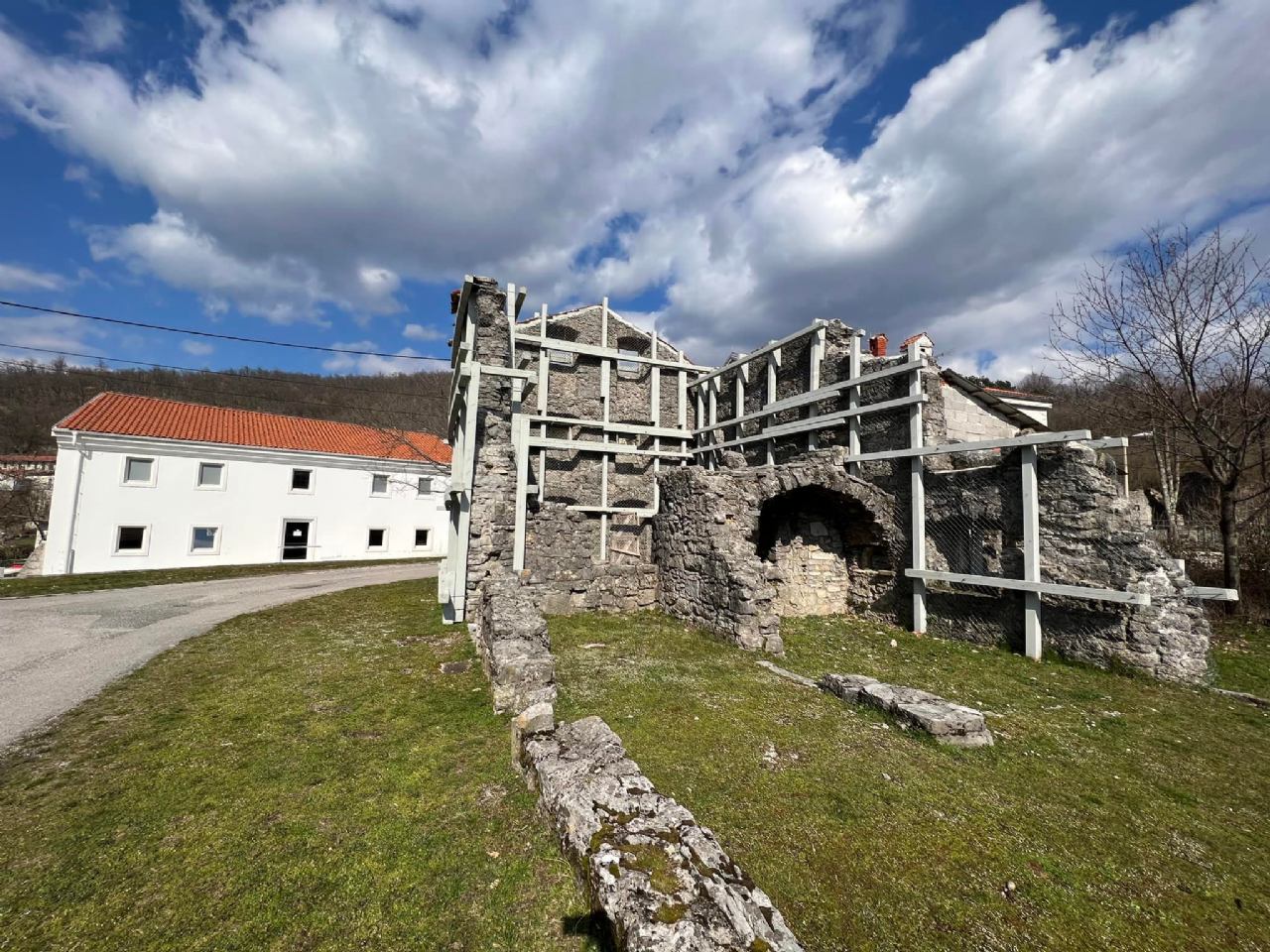
Photo: Memorial Center "Lipa Remembers”
After the collapse of the Austro-Hungarian Empire in 1919,
the Liburnian Karst region became part of the Kingdom of Italy, and after
Italy’s capitulation in 1943, it fell under German occupation. General Ludwig
Kübler issued an order stating that any assistance to partisans would result in
the death penalty—a document now exhibited in the permanent collection of the
Memorial Center. The village of Lipa, which supported the partisans, became a
target of the occupiers. During the raid on April 30, 1944, German soldiers
killed civilians, looted, and burned the village, documenting the atrocities
with photographs. Thanks to the courage of an employee at a photography studio
in Ilirska Bistrica, the photographs were preserved and today serve as evidence
of the crime. After the war, about a hundred survivors rebuilt their homes and
lives. The first post-war child, Branko Afrić, was born in 1945, and in 1965
the Fund for the Reconstruction of Lipa was established.The village of Lipa is registered as a site of special
historical significance related to fascist crimes. It is home to the Memorial
Center "Lipa Remembers”, a branch collection of the Maritime and History
Museum of the Croatian Littoral in Rijeka, dedicated to the tragedy of Lipa on
April 30, 1944.Every year on April 30, the event "Lipa Remembers” is
held to honor the victims and serve as a lasting reminder of the crime and the
resilience of life.
Memorial Center "Lipa Remembers”: https://ppmhp.hr/en/lipa/about-the-centre/
Virtual tour of Lipa by the Maritime and History Museum of
the Croatian Littoral, Rijeka: https://ppmhp.hr/360-setnja-lipom/